How Is a Wildfire Risk Score Calculated? A Simple Guide
Learn what a wildfire risk score means for your home, how is a wildfird risk score calculated, and steps you can take to lower your risk and protect your property.
Think of your wildfire risk score like a credit score for your property’s safety. Insurance companies use this single number—your fire risk score—to determine your premiums and even if they'll cover you at all. It’s a critical piece of your financial puzzle, yet most homeowners don't know their score or how it's determined. But this isn't a number you just have to accept. Understanding how a wildfire risk score is calculated is the first step to improving it. We'll walk you through the key factors and give you actionable steps to lower your risk and secure your coverage.
Key Takeaways
- Your Score Directly Affects Your Insurance: Insurers use your wildfire risk score to calculate premiums and determine your eligibility for coverage. A high score can lead to higher costs or even non-renewal, directly impacting your finances and ability to protect your home.
- Focus on What You Can Control: While you can't change your home's location, you have significant power over its immediate surroundings. Actively managing your defensible space and hardening your home with fire-resistant materials are the most effective ways to lower your risk.
- Understand Your Specific Vulnerabilities: A generic score isn't enough to create a smart plan. A detailed assessment identifies the exact issues on your property, giving you a clear, personalized roadmap to make the most impactful improvements.
What's My Wildfire Risk Score?
Think of a wildfire risk score as a number that tells you how likely your property is to be damaged in a wildfire. It’s a straightforward concept, but the details can get a little complicated. There isn’t one single, universal scoring system. Instead, different insurance companies and risk modeling agencies use their own methods, often on a scale of 1 to 10 or 1 to 100. No matter the scale, the rule is always the same: a higher number means a higher perceived risk.
These scores aren’t just pulled out of thin air. They are calculated by analyzing dozens of data points specific to your property and its surroundings. Factors like the slope of your land, the types of vegetation nearby, local weather patterns, and your home’s distance from dense forests all play a role. Insurance carriers rely heavily on these assessments to understand their potential for loss in a specific area. This information is a key part of how insurance companies assess risk and make decisions about who and what they can afford to cover.
What Your Score Is Actually Telling You
So, what does this number actually mean for you and your home? In short, it’s a big deal for your insurance. Your insurance company uses your wildfire risk score as a primary tool to decide whether to offer you a new policy or renew your existing one. It’s one of the most important data points they use to calculate your premium—the amount you pay for coverage. A high-risk score can translate directly to higher insurance costs because the insurer sees your property as a greater financial liability. Essentially, they believe there's a higher chance they'll have to pay out a claim, and your premium reflects that increased risk.
The Technical Components of Wildfire Risk
To really understand your score, it helps to know how risk modelers think. They generally break down wildfire risk into two main categories: hazard and vulnerability. Think of it this way: hazard is the potential for a big fire to happen in your area, while vulnerability is how well your specific property can stand up to it. While they sound similar, knowing the difference is key because it shows you exactly where you can focus your efforts to make your home safer and more insurable. One part of the equation is out of your hands, but the other gives you a significant amount of control.
Hazard: A Fire's Potential
Hazard describes the physical characteristics of a potential wildfire in your location. It’s all about the fire itself—how likely it is to ignite, how quickly it could spread, and how intensely it might burn. This is determined by factors you can’t change, like your region's climate, typical weather patterns like high winds or low humidity, the topography of the surrounding landscape, and the type of vegetation that fuels fires in your area. A home on a steep, chaparral-covered slope in a dry, windy canyon has a much higher hazard level than a home on a flat, irrigated lawn. This is the "big picture" risk that insurers assess for an entire geographic area.
Vulnerability: What's in a Fire's Path
Vulnerability is where you come in. This component measures your property’s specific susceptibility to damage if a wildfire does occur. It focuses on the features of your home and its immediate surroundings, often called the home ignition zone. Things like having a wood shake roof, single-pane windows, flammable plants right next to the house, or a deck cluttered with dry leaves all increase your vulnerability. This is the most important part of the risk equation for any homeowner because it’s entirely within your control. By managing your defensible space and hardening your home with fire-resistant materials, you can dramatically reduce your vulnerability, lower your risk score, and improve your chances of staying insured.
How Your Score Impacts Your Home and Safety
Beyond just influencing your premium, a high wildfire risk score can have serious consequences. Many homeowners in high-risk areas have faced sudden policy non-renewals or have been denied coverage altogether, leaving them scrambling to find protection. This situation often forces property owners into last-resort options like a state's FAIR Plan, which can be significantly more expensive while offering less comprehensive coverage. Ultimately, your score isn't just an abstract number; it's a critical factor that directly impacts your ability to protect your home and your financial well-being. Knowing your score is the first step toward taking control of your property's safety.
How Is a Wildfire Risk Score Calculated?
It can feel like your wildfire risk score is a mysterious number pulled out of thin air, but there’s a lot of data and technology behind it. Insurance companies and risk modelers don't use a single, universal formula. Instead, they combine various data sources and analytical models to create a detailed picture of a property's specific risk. Understanding what goes into these calculations is the first step toward figuring out how you can improve your score and, more importantly, your home's safety.
The Data Points That Determine Your Risk
At its core, a wildfire risk score is a number that estimates how likely your property is to be impacted by a wildfire. Different companies use different scales—some go from 1 to 10, others from 1 to 100—but the general rule is the same: a higher number means a higher risk. To calculate this, analysts pull from a wide range of information. They look at high-resolution satellite imagery, historical fire records, and even climate predictions. They also factor in property-specific details, like the surrounding vegetation, the slope of your land, and the layout of buildings in your neighborhood. It's a comprehensive data-driven assessment designed to predict future possibilities.
From Satellites to Slopes: What's Being Measured
It’s not just about the data itself, but how it’s analyzed. Modern risk assessment uses powerful technology, including AI simulations, to model how a fire might behave in your specific area. One of the most critical factors these models examine is your defensible space—the buffer you create between your home and the surrounding vegetation. In fact, detailed analysis has shown that the quality of your defensible space is a very strong predictor of whether a home will survive a wildfire. This is why today’s best wildfire vulnerability scores are so focused on the specific details of your property, not just the general risk of the region.
Understanding Different Wildfire Risk Models
Property-Specific vs. Community-Level Models
It’s important to know that wildfire risk models generally fall into two categories, and only one gives you a truly personal action plan. The most useful type for a homeowner is a property-specific model, which provides a detailed analysis of your individual home and yard. These scores are calculated using high-resolution satellite imagery and other data to look at factors like the slope of your land and the types of vegetation growing nearby. This granular approach gives you a clear picture of your unique vulnerabilities. It’s the difference between knowing your general neighborhood is at risk and knowing that the overgrown bushes next to your deck are your biggest liability. This is the kind of specific feedback you need to make smart, effective changes that truly protect your home.
On the other hand, community-level models zoom out to assess risk for an entire town or county. These models consider broader factors like regional climate patterns and historical fire activity to assign a general risk rating to a large area. While this information is crucial for city planners and fire departments, it doesn’t tell you much about your specific home’s safety. Your property could be meticulously maintained in a high-risk zone, or it could have major vulnerabilities in a lower-risk area. That's why understanding the difference is so critical. While you can't change your town's overall rating, you have direct control over the factors that determine your property-specific score.
FireLine vs. CoreLogic: What's the Difference?
Because there isn't one standard system, you might find that different insurers use different scoring models. Two of the most common ones you'll hear about are FireLine from Verisk and the CoreLogic Wildfire Risk Score. While both aim to assess risk, they weigh factors differently. For example, FireLine focuses heavily on nearby vegetation, the steepness of the terrain, and whether emergency vehicles can easily reach your home. CoreLogic’s model also considers vegetation and terrain but adds in factors like past wildfire activity and the potential for wind-blown embers. Knowing that different models exist helps explain why your score might vary from one provider to another.
The Original Purpose of Risk Scores
Wildfire risk scores weren't always about insurance premiums and policy renewals. Originally, they were created with a much more collaborative goal in mind: to help homeowners and communities understand their specific vulnerabilities. The idea was to translate complex data about vegetation, weather, and terrain into a straightforward number that could guide safety efforts. By knowing their risk, property owners could make smarter decisions about where to clear brush or what building materials to use. These scores were meant to empower people, giving them the information they needed to reduce their wildfire risk proactively. It was only as wildfires became more frequent and costly that the insurance industry adopted these scores as a primary tool for insurance placement, shifting their function from an educational guide to a critical financial gatekeeper.
What Really Affects Your Wildfire Risk Score?
Your wildfire risk score is a complex puzzle, pieced together from dozens of data points about your property and the environment around it. Think of it less as a single grade and more as a comprehensive story of your home’s unique situation. Some of these factors, like the weather, are out of your hands. But many others, especially those closest to your home, are things you can directly influence. Understanding what goes into your score is the first step toward improving it and making your property safer.
Does Your Home's Location Put You at Risk?
Where your home is situated plays a significant role in its risk profile. A property on a steep, vegetation-covered slope will naturally face a higher risk than one on a flat, open plain because fire spreads much faster uphill. Models that calculate risk scores use satellite imagery, climate predictions, and property details to analyze these features. They look at the specific topography of your land, its elevation, and its position relative to canyons or ridges, which can act like funnels for wind and flames. Your broader location within a region known for wildfire activity also contributes to the baseline risk assigned to your property.
Why Your Yard's Vegetation Matters
The plants and trees surrounding your home are one of the most critical—and controllable—factors in your wildfire risk score. This is your defensible space: the area around your home that you can manage to slow or stop an approaching wildfire. Risk models closely examine the type, density, and health of this vegetation. Are there dead trees or dry brush near your foundation? Are tree canopies overhanging your roof? Data from past wildfires consistently shows that homes with well-maintained defensible space are far more likely to survive. This is where you have the most power to lower your score and protect your home.
Past Fires and Future Weather: What's the Impact?
Wildfire risk models don't just look at your property in isolation; they consider the bigger picture of regional hazards. This includes your area's fire history and prevailing weather patterns. The calculation considers the likelihood and intensity of wildfires based on historical data and landscape conditions. Factors like frequent high winds, seasonal droughts, and low humidity create an environment where fires can easily start and spread. While you can't change the weather, knowing that you live in an area with a high wildfire hazard underscores the importance of focusing on the things you can control, like your defensible space and home hardening.
How Does Your Wildfire Risk Score Affect Your Insurance?
Your wildfire risk score is more than a number—it’s a key factor that influences your ability to insure your home. Insurance companies use these scores to assess risk, and a high score can lead to higher premiums, trouble finding coverage, or even issues when you sell. Understanding this connection is the first step toward taking control and protecting your investment.
Will a High Score Mean Higher Premiums?
Think of your wildfire risk score as a major factor in your insurance pricing. Insurers use it to calculate the likelihood of a wildfire claim. A higher score signals greater risk, which almost always means higher premiums. It’s their way of balancing the financial risk they take on. If your score is high, expect to pay more to keep your home covered. This is a standard practice for assessing property risk. Taking steps to lower your score can have a direct, positive impact on your wallet.
Could Your Score Get Your Policy Canceled?
A high wildfire risk score can lead to a more serious problem than just high premiums. If an insurer decides your property's risk is too great, they may refuse to offer a new policy or choose not to renew your existing one. This is a growing issue in many high-risk areas. For example, some major carriers have stopped writing new policies in parts of California, leaving homeowners with fewer options. A non-renewal notice is stressful and can force you to find new coverage quickly, often at a much higher price.
The Shifting Insurance Landscape in High-Risk Areas
The insurance market in wildfire-prone regions is becoming increasingly difficult for homeowners. It’s no longer just a matter of rising costs; the availability of coverage itself is shrinking. As wildfires become more frequent and destructive, insurance companies are re-evaluating their exposure to risk. In response, some major carriers have begun to limit their business in high-risk states like California. This industry-wide shift means that even homeowners with a long history of timely payments can find themselves facing non-renewal, leaving them scrambling to find new coverage in an increasingly competitive and expensive market. This reality underscores how a high score can directly impact your finances and ability to protect your home.
Does a Wildfire Score Impact Your Home's Value?
The impact of a high wildfire risk score extends beyond insurance bills—it can also affect your home's market value. Potential buyers need insurance to get a mortgage, and if your home is uninsurable or extremely expensive to cover, it can derail a sale. Homeowners with high scores often find their policies canceled or denied, forcing them onto more expensive, limited-coverage state plans. This reality can make a property less attractive on the market, potentially lowering its value and making it harder to sell.
How Wildfire Risk Influences Real Estate Decisions
When you're buying or selling a home in a wildfire-prone area, the property's risk score is a critical piece of the puzzle. For buyers, a high score can be a major red flag, signaling future struggles with insurance costs and availability. Lenders typically require homeowners insurance to approve a mortgage, so if a property is deemed uninsurable or too expensive to cover, the deal can fall apart. This creates a significant hurdle for sellers, as a high-risk score can shrink their pool of potential buyers and even lower the home's market value. It's a new reality where a property's saleability is directly tied to its insurability.
Let's Bust Some Wildfire Risk Score Myths
When it comes to wildfire risk scores, it’s easy to feel like you’re in the dark. There’s a lot of confusing information out there, and it can leave you feeling powerless. But understanding the truth behind these scores is the first step toward protecting your home and gaining peace of mind. Let’s clear up a few common misconceptions.
Myth: You're Stuck with Your Score
It’s a common belief that your wildfire risk score is set in stone, dictated entirely by your location. While geography certainly plays a role, it’s far from the whole story. A major driver of wildfire risk is the condition of your immediate surroundings—specifically, the vegetation within your defensible space. Research shows that for many high-risk properties, overgrown or poorly managed vegetation is the primary problem. This is actually great news because it’s a factor you can directly influence. By actively managing the plants, trees, and debris around your home, you can significantly improve your defensible space and, in turn, lower your risk.
Myth: Your Score Is Hidden and Final
Feeling like your home is being graded by a secret system you can’t see or question is frustrating. Fortunately, you have more rights than you might think. In states like California, regulations require insurance companies to be more transparent. Insurers must inform you of your property’s wildfire risk score and explain how they calculate it. They are also required to offer discounts for proactive mitigation efforts you’ve completed. Most importantly, if you disagree with the assessment, you have the right to appeal your score. Don’t assume the initial number is final; you can and should ask questions and provide evidence of the work you’ve done to make your home safer.
Your Right to Appeal (and Its Limits)
If your insurance company hands you a high wildfire risk score, it’s easy to feel like the decision is final. But it’s not. You have the right to question and appeal their assessment, especially if you’ve done work to make your property safer. In states with strong consumer protections like California, insurers are required to be transparent about your score and the factors they used to calculate it. This means you can ask for the details and, if you find inaccuracies or feel they’ve overlooked your mitigation efforts, you can formally appeal the score. This is your chance to present evidence—like photos of your cleared defensible space or receipts for a new fire-resistant roof—and make your case.
It’s important to know that the appeal process has its limits. You’ll be dealing directly with your insurance company, and while they are required to review your appeal, state agencies like the California Department of Insurance typically don’t get involved in these disputes. If your insurer denies your appeal, that decision is often final, and you may need to look for coverage elsewhere. This is why being proactive is so critical. Documenting your mitigation work with a detailed report not only strengthens a potential appeal but also gives you the proof you need to shop for a better policy with other carriers who will recognize the steps you’ve taken to reduce your risk.
Myth: A Score Is a Score
If you’ve seen different risk scores for your property from different sources, you’re not alone. There is no single, national standard for calculating wildfire risk. One company might use a 1-100 scale, while another uses a 1-10 rating. Each model weighs various factors—like slope, vegetation density, and roof materials—differently. This lack of standardization can be confusing, but it highlights why understanding the specifics behind your score is so important. Instead of focusing on just the number, look for an assessment that clearly explains which factors are increasing your risk. This gives you a clear, actionable roadmap for making meaningful improvements to protect your property.
How to Lower Your Fire Risk Score
The great news is that your wildfire risk score isn't set in stone. While you can't change your home's location, you have significant control over the factors that determine its vulnerability. By taking proactive steps, you can directly influence your score, making your property safer and more appealing to insurance providers. It all comes down to reducing the chances of your home igniting during a wildfire.
Focusing your efforts in a few key areas can make a world of difference. Creating a buffer zone around your home, reinforcing its structure with fire-resistant materials, and getting a clear picture of your specific vulnerabilities are the most effective ways to lower your risk. These actions show that you are actively managing your property’s defense against wildfire, which is exactly what insurers want to see. Let’s walk through how you can get started.
Your First Step: Master Your Defensible Space
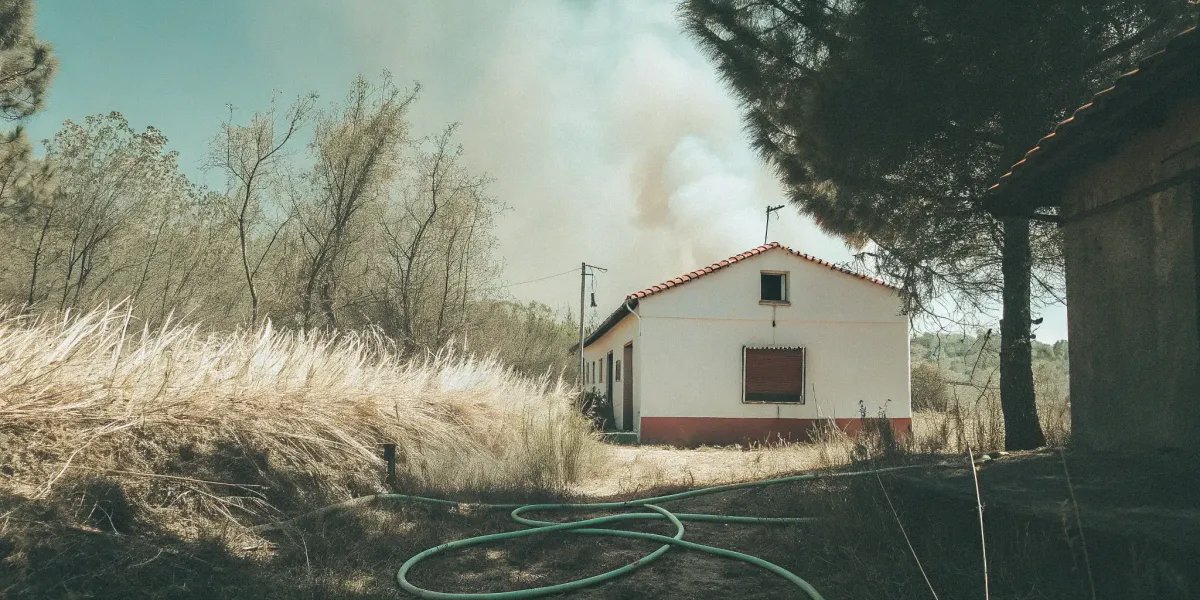
Think of defensible space as a protective bubble around your home. It’s a buffer zone you create by clearing away flammable vegetation, which acts as a fuel break between an approaching wildfire and your house. Research shows that for high-risk properties, the main driver of indefensible space is overgrown vegetation—something you have complete control over. You can create defensible space by removing dead plants, trimming trees so branches are not overhanging your roof, and keeping your lawn mowed and watered. This simple maintenance reduces the fuel a fire needs to reach your home and gives firefighters a safer area to work if they need to defend it.
Zone 1: The Immediate Zone (0-5 feet)
This five-foot perimeter directly touching your home is the most critical area for wildfire defense. Think of it as a non-combustible zone where embers have nowhere to land and ignite. Your goal here is to remove anything flammable. This means swapping out wood mulch for gravel or pavers, clearing dead leaves from under decks, and moving firewood piles at least 30 feet away from the house. Make sure to regularly clean your gutters and roof of pine needles and other debris. Even flammable patio furniture or a doormat can be a weak link, so consider ember-resistant materials for everything in this immediate area.
Zone 2: The Intermediate Zone (5-30 feet)
In this zone, your focus shifts from eliminating fuel to interrupting its path. The goal is to create a "lean, clean, and green" landscape that slows a fire down and keeps flames small. You can do this by creating space between trees and shrubs, removing dead vegetation, and trimming lower tree branches up to 6-10 feet from the ground to prevent a ground fire from climbing into the canopy. Keep your lawn mowed and well-watered. This isn't about having a barren yard; it's about creating strategic breaks in the vegetation to reduce a fire's intensity as it approaches your home.
Zone 3: The Extended Zone (30-100 feet)
The goal for this outer ring is to reduce the energy of an approaching wildfire. You don't need to clear-cut the area, but you should thin out the vegetation. Focus on removing dense clusters of small trees and shrubs, getting rid of dead trees and fallen branches, and creating horizontal space between the canopies of mature trees. By reducing the overall fuel load, you make it harder for a fire to build momentum and climb from the ground into the treetops, where it becomes much more difficult to control. This is a key step in managing the Wildland Urban Interface around your property.
Upgrade to Fire-Resistant Materials
Beyond clearing vegetation, you can also strengthen your home’s structure—a process known as "home hardening." This involves using building materials that are less likely to catch fire from flying embers, which can travel a mile or more ahead of a wildfire. To effectively reduce your risk, it’s crucial to use fire-resistant materials for your home’s most vulnerable parts, including roofing, siding, and decks. Upgrading single-pane windows to dual-pane tempered glass and covering attic and foundation vents with fine metal mesh can also significantly lower the chances of your home igniting during a wildfire event. These upgrades are some of the most impactful investments you can make in your home's safety.
Protecting Your Home from Flying Embers
Flying embers are the biggest threat to your home during a wildfire. They can travel over a mile ahead of the flames and are notorious for finding their way into the smallest openings, igniting your house from the inside out. Your best defense is to seal off these entry points. Start by covering all vents—attic, foundation, and eaves—with a fine metal mesh of 1/8-inch or smaller, since embers can easily pass through larger screens. Next, inspect the areas where different building materials meet, like where your siding connects to the foundation, and seal any gaps. Upgrading to dual-pane tempered glass windows is another critical step, as they are far less likely to shatter from intense heat, which would give embers a wide-open invitation inside.
Don't Guess: Get a Clear Action Plan
Knowing where to start can feel overwhelming, which is why getting a clear assessment is so important. An objective evaluation helps you prioritize your efforts and focus on the changes that will have the biggest impact. Using a tool like the Defensible Space Score can help you evaluate your wildfire risk through a clear, data-driven assessment of the area surrounding your property. This score provides actionable insights that guide you in making informed decisions to mitigate your risk. Instead of guessing, you get a personalized roadmap for protecting your home, which you can also share with your insurance provider to demonstrate your proactive efforts.
Earning Insurance Discounts for Mitigation
All the hard work you put into managing your defensible space and hardening your home doesn't just make you safer—it can also save you money. Insurance companies are increasingly required to acknowledge and reward proactive homeowners. In fact, many state regulations mandate that insurers must consider the mitigation efforts you've taken when setting your premiums. This means the actions you take on your property, like clearing away flammable debris and upgrading to fire-resistant siding, can translate directly into discounts on your policy. Be sure to document everything. Keep receipts for materials and take before-and-after photos of your work. Share this proof with your insurance agent to make sure you get the credit you deserve for reducing your risk.
Beyond the Score: Essential Wildfire Preparedness
Improving your wildfire risk score is a huge step toward protecting your property, but it’s not the end of the road. A low score reduces your risk, but it doesn’t eliminate it entirely. Wildfires are unpredictable, and being truly prepared means having a plan that goes beyond your property lines. It’s about ensuring your family’s safety in a worst-case scenario. This means thinking through the logistics of an evacuation, assembling emergency supplies, and establishing clear communication channels before a fire ever threatens your neighborhood.
Think of it this way: your defensible space and hardened home are your property’s defense plan, but your family needs its own safety plan. Having a detailed strategy and the right supplies ready to go is crucial for your family's safety when time is short and stress is high. The next few steps will walk you through creating a comprehensive preparedness plan that protects what matters most—the people inside your home. This preparation gives you peace of mind, knowing you’re ready to act decisively if the need ever arises.
Key Wildfire Safety Guidelines
A solid wildfire safety plan rests on two pillars: having the right supplies and staying informed. Start by building a "go bag" for each member of your family, including pets. This is an emergency kit you can grab at a moment's notice, packed with essentials like water, non-perishable food, a first-aid kit, flashlights, and copies of important documents. Next, make sure you can receive timely information. Sign up for your local emergency alert system and be familiar with your county’s emergency services website and social media channels. Knowing how you’ll get reliable updates is just as important as knowing what to pack.
Creating Your Family Evacuation Plan
When an evacuation order is issued, you won’t have time to figure things out. Your family needs a clear, practiced plan. Start by identifying at least two escape routes from your neighborhood, since one may be blocked during a fire. Next, designate two meeting spots: one just outside your immediate neighborhood and a second one further away, like a friend’s house in another town, in case you can’t return to the area. It’s also critical to have an out-of-state contact person everyone can call to check in with, as local phone lines can become overwhelmed. Once you have a plan, practice it with your family so everyone knows exactly what to do.
Remembering the "5 Ps" of Evacuation
In the stress of an evacuation, it’s easy to forget something important. To simplify what to grab, many emergency responders recommend focusing on the "5 Ps." This simple memory aid helps you prioritize the absolute essentials when you only have minutes to spare. The list includes: People and Pets, Prescriptions (including medications and eyeglasses), Papers (important documents like birth certificates and insurance policies), and Priceless items (irreplaceable photos or family heirlooms). By keeping the "5 Ps" in mind, you can focus your energy on getting your family and your most critical belongings out safely and efficiently.
Related Articles
Frequently Asked Questions
Why did my insurance company suddenly raise my premium or drop my coverage? Your wildfire risk score is likely the main reason. Insurance companies use this score to predict the chances of your home being damaged in a wildfire. If recent data, like new vegetation growth or updated climate models, causes your score to increase, the insurer sees your property as a bigger financial risk. This often leads directly to higher premiums or, in some cases, a decision not to renew your policy at all.
Is there anything I can actually do to change my wildfire risk score? Absolutely. While you can't change your home's general location, your score is heavily influenced by factors you can manage. The condition of your defensible space—the 100-foot area around your home—is one of the most significant and controllable elements. By clearing flammable vegetation, trimming trees, and maintaining your property, you can directly lower your risk and, as a result, your score.
What's the first step I should take to lower my risk? Start with what’s closest to your house and work your way out. The first five feet around your foundation, known as the "immediate zone," is the most critical area. Clear this space of all dead leaves, dry grass, and flammable mulch. Make sure no tree branches touch or hang over your roof. Addressing this small but vital area is one of the most effective first steps you can take to make your home safer.
How do I find out my score, and what if I disagree with it? You have the right to know. In many states, your insurance provider is required to share your score with you and explain the factors that went into it. If you believe the assessment is inaccurate—perhaps because you’ve already done significant mitigation work—you can appeal it. You should contact your insurance agent and be prepared to provide photos and documentation of the improvements you've made.
Why are there different wildfire risk scores for the same property? There isn't one universal system for calculating wildfire risk. Different insurance carriers and risk modeling agencies, like Verisk and CoreLogic, use their own unique formulas. While they all look at similar factors like vegetation and slope, they might weigh them differently. This is why it’s so important to understand the specific details behind your score, rather than just focusing on the number itself.