Decks, Fences, and Attachments: The Hidden Pathways Fire Uses to Reach Your Home
Decks and fences can act as hidden ignition pathways during a wildfire. This guide explains how embers ignite attachments, how fire travels along connected materials, and what practical upgrades reduce risk without full replacement.

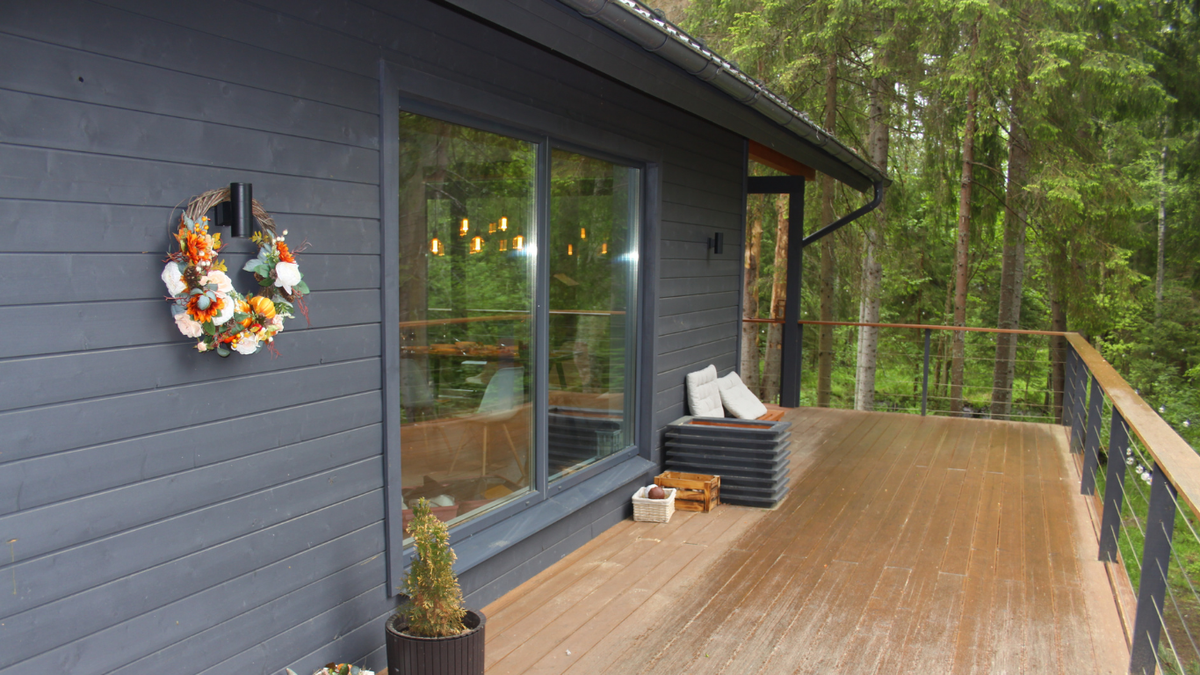
Most homeowners picture wildfire as a wall of flames moving through trees. In reality, many homes ignite because fire finds a small, overlooked pathway—often attached directly to the structure.
Decks, fences, stairs, and other exterior attachments are common failure points. They collect embers, trap heat, and sometimes act as a physical bridge that carries fire to the house itself.
If you understand how these components behave during a wildfire, you can reduce risk without tearing everything out.
Key Takeaways
- Embers are the primary threat to decks and fences—not just direct flames.
- Horizontal surfaces (like deck boards) trap burning debris and allow ignition to build.
- Wood fences attached directly to homes can act as a fuse.
- The 0–5 foot zone around the home is the most critical area for noncombustible materials.
- Small retrofits—like replacing fence sections near the house—can meaningfully reduce risk.
Why Attachments Matter More Than Most People Realize
Wildfires don’t need to engulf your entire yard to destroy a home. They only need a vulnerable point.
Attachments create that opportunity because they:
- Connect combustible materials directly to the house
- Provide horizontal surfaces where embers accumulate
- Create concealed spaces where heat can build unnoticed
- Sit within the most vulnerable area: the immediate ignition zone (0–5 feet)
Once an attachment ignites, the fire is no longer approaching the home—it’s touching it.
Understanding the Three Wildfire Threats
Before looking at specific components, it helps to understand how fire reaches them.
1. Embers
Wind-driven embers can travel miles ahead of a wildfire front. They land on horizontal surfaces, in corners, and in debris. If they smolder long enough, they ignite combustible materials.
Deck boards, doormats, stored items, and leaf-filled gaps are prime targets.
2. Radiant Heat
If nearby vegetation, structures, or fences ignite, radiant heat can preheat and dry deck materials until they ignite without direct flame contact.
3. Direct Flame Contact
In some cases, burning vegetation or a fence line directly touches the deck or siding. This is less common than ember ignition, but when it happens, attachments provide a clear path to the home.
Decks: How They Fail in Wildfires
Decks are particularly vulnerable because of their design.
Why Decks Ignite
- Horizontal boards trap embers.
- Gaps between boards allow embers to fall below.
- The underside creates a sheltered space where embers can smolder undetected.
- Stored items (furniture cushions, firewood, storage bins) increase fuel load.
Once the underside ignites, fire can spread to siding, windows, and eaves.
How to Reduce Deck Risk
1. Focus on the 0–5 Foot Zone
If your deck connects directly to the house, the area where it meets the structure should be treated as ignition-sensitive.
Best practices include:
- Removing combustible mulch or vegetation directly beneath and adjacent to the deck
- Installing noncombustible materials (gravel, pavers, concrete) in the first 5 feet
2. Upgrade Decking Materials (When Possible)
- Composite decking with a high fire rating performs better than untreated wood.
- Heavy timber performs better than thin boards because it takes longer to ignite.
- Avoid lightweight, untreated lumber for new builds.
No decking material is “fireproof.” The goal is ignition resistance and slower fire spread.
3. Enclose the Underside
Open undersides allow embers to accumulate.
Options include:
- Vertical noncombustible skirting
- 1/8-inch metal mesh screening
- Solid ignition-resistant materials
This reduces ember intrusion and airflow that feeds combustion.
4. Maintain It Like It’s Part of the Roof
- Regularly clear leaves from between boards
- Remove debris from corners and edges
- Avoid storing combustible materials underneath
Fences: The “Fuse Effect”
Wood fences are one of the most overlooked wildfire risks.
When a fence runs from a property line to the side of a house and is physically attached, it creates a continuous combustible pathway.
If the fence ignites—even hundreds of feet away—it can carry flame directly to the structure.
How Fences Fail
- Embers ignite dry wood pickets.
- Flame travels along the fence line.
- The fence meets the home’s siding.
- Fire transfers to the structure.
It behaves like a horizontal wick.
Practical Solutions
1. Replace the Last 5 Feet
You do not need to replace the entire fence.
Instead:
- Replace the section within 5 feet of the house with noncombustible material (metal fencing, masonry, etc.).
- Create a physical break between fence and structure.
This interrupts the fire pathway.
2. Avoid Direct Attachment
Where possible:
- Terminate the fence just short of the house.
- Use a metal gate or masonry column at the connection point.
Small design changes can significantly reduce structure exposure.
Stairs, Railings, and Overhangs
Exterior stairs and railings behave similarly to decks:
- They collect embers.
- They often connect directly to siding.
- They can ignite from below.
Treat them as part of the deck system:
- Remove debris buildup.
- Avoid storing items beneath stairs.
- Use ignition-resistant materials when replacing components.
Storage Under Decks and Attachments
The most common amplification factor is stored fuel.
Common examples:
- Firewood stacks
- Propane tanks
- Outdoor furniture cushions
- Cardboard boxes
- Lawn equipment
These materials dramatically increase ignition probability. The 0–5 foot zone should contain only noncombustible materials whenever possible.
Cost and Prioritization
Not every homeowner can replace a deck.
Here’s how to prioritize:
Low-Cost / DIY
- Remove debris regularly
- Clear vegetation in the first 5 feet
- Replace combustible mulch with gravel
- Relocate stored materials
- Install metal mesh screening
Moderate Cost
- Replace fence section near house
- Add noncombustible skirting to deck underside
- Upgrade deck boards during routine maintenance
Higher Investment
- Full deck replacement with ignition-resistant materials
- Structural redesign to eliminate direct flame pathways
Incremental changes matter. Risk reduction is layered.
Common Myths About Decks and Fences
Myth: If my yard doesn’t burn, my deck won’t burn.
Reality: Wind-blown embers can ignite a deck even if surrounding vegetation remains intact.
Myth: Composite decking is fireproof.
Reality: It may resist ignition longer, but it can still burn under sustained ember exposure.
Myth: A small fence can’t threaten a home.
Reality: A connected fence line can transfer flame directly to siding.
Myth: Only homes next to forests need to worry about this.
Reality: Ember storms affect entire neighborhoods.
How This Fits Into a Larger Wildfire Strategy
Decks and fences are not isolated problems. They sit at the intersection of:
- Home hardening (material choices and structural design)
- Defensible space (fuel management around the structure)
- Ember resistance (blocking entry and accumulation)
Treat attachments as part of the home’s ignition zone—not as landscaping features.
Assessing Your Own Property
Walk your property with these questions:
- Does any combustible material directly touch my house?
- If my fence ignited 50 feet away, could flame reach my siding?
- Is there debris trapped between deck boards?
- Is the area beneath my deck clear and noncombustible?
- What materials exist within the first 5 feet of my structure?
If you’re unsure how these elements interact, a structured wildfire risk assessment can help identify vulnerabilities systematically rather than guessing.
Wildfire mitigation is not about eliminating risk entirely. It’s about removing easy ignition pathways.
Attachments are often the easiest pathway to fix.
Related Articles
- 5 Home Hardening Techniques & Their Real Costs
- 15+ Best Products for Home Hardening in 2025
- Home Hardening Against Wildfires: A Complete Guide
- The Ultimate Wildfire Hazard Assessment for Homeowners
- The Ultimate Wildfire Hazard Assessment Checklist
Frequently Asked Questions
Does passing defensible space inspection mean my home is wildfire safe? No. Passing defensible space inspection means your property meets minimum vegetation management standards. It does not evaluate how your home itself will perform under ember exposure, radiant heat, or wind-driven fire conditions. Clearance reduces certain risks, but it does not address all of the ways homes ignite during wildfires.
Why would an insurance company deny coverage if the fire department approved my property? Fire departments and insurance companies are measuring different things. Clearance inspections focus on vegetation and access to support suppression efforts. Insurance underwriting focuses on the probability of structure loss, which is strongly influenced by construction details, attachments, and ember vulnerabilities that clearance inspections often do not assess.
Are embers really more dangerous than flames? For homes, yes. Most structures lost in wildfires ignite due to wind-driven embers rather than direct flame contact. Embers can enter through vents, collect in roof features and gutters, and ignite combustible materials attached to the home, sometimes hours before flames arrive.
If I improve my home hardening, will my insurance be guaranteed? No. Wildfire mitigation reduces risk, but it does not eliminate it. Insurance decisions depend on many factors, including regional fire activity, company exposure limits, and broader market conditions. Home hardening improves wildfire performance and often improves underwriting outcomes, but guarantees do not exist.
What is the most important area to focus on first? The area immediately around the structure, often called the 0–5 foot or Immediate Zone, has an outsized impact on ignition risk. This zone is where embers accumulate and where small ignitions most easily become structure fires. Addressing combustible materials here is often one of the highest-impact steps homeowners can take.
Do defensible space and home hardening replace each other? No. They address different wildfire exposure pathways. Defensible space reduces fire intensity and radiant heat near the home. Home hardening reduces the likelihood that embers or heat will ignite the structure itself. Both are necessary for meaningful risk reduction.
Can a home ever be fully fireproof? No. There is no such thing as a fireproof home in a wildfire. Mitigation strategies reduce the likelihood of ignition and loss, but they cannot guarantee survival under all conditions. Wildfire safety is about lowering risk, not eliminating it.
Why don’t clearance inspections include home hardening requirements? Because defensible space programs were designed to manage vegetation and improve firefighting conditions, not to evaluate building construction. Home hardening assessments require a different scope, different expertise, and different evaluation criteria.