Why Defensible Space Compliance Doesn’t Guarantee Insurance Approval
Passing defensible space inspection doesn’t mean your home is low wildfire risk or insurable. This guide explains why clearance and insurance evaluate different things, how homes actually ignite in wildfires, and what homeowners can do to close the gap.

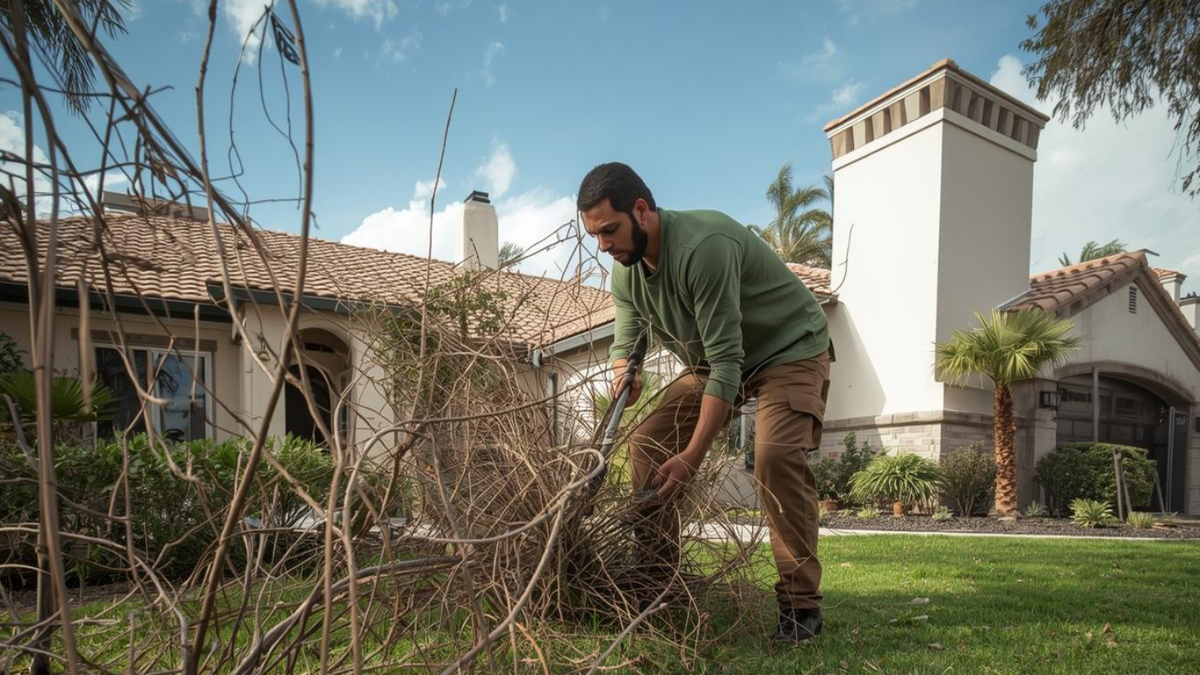
Many homeowners assume that once they’ve passed defensible space or fire clearance inspections, their home should also be acceptable to insurers. After all, if the fire department says the property is compliant, shouldn’t that mean it’s “safe”?
In practice, this is where confusion and frustration sets in.
Homes are routinely cleared by local fire authorities and still face non-renewals, higher premiums, or outright denials from insurance companies. This disconnect isn’t because homeowners did something wrong. It exists because defensible space compliance and insurance underwriting measure different things, for different reasons.
Understanding that distinction is essential if you want to reduce real wildfire risk and improve your odds of maintaining coverage.
Key Takeaways
- Defensible space clearance is a minimum vegetation standard, not a full wildfire risk assessment
- Insurance approval depends heavily on home hardening and ignition vulnerability, not just clearance
- Most homes burn from embers, not advancing flame fronts
- Passing clearance does not address many of the features insurers flag
- Wildfire risk reduction requires layered protection, not a single checklist
What Defensible Space Compliance Is Designed to Do
Defensible space requirements exist for a very specific purpose: to reduce fire intensity near homes and improve firefighter access and safety. They were developed as vegetation management standards, not as predictors of whether a structure will survive a wildfire.
When a property passes defensible space or fire clearance, it means the surrounding vegetation meets minimum spacing, height, and fuel reduction rules. These standards help slow fire spread, lower flame lengths near structures, and create safer conditions for suppression efforts. That work matters, and it should not be minimized.
What defensible space compliance does not attempt to do is evaluate how a specific home will respond to ember exposure, radiant heat, or prolonged wind-driven fire conditions. Clearance inspections are generally not assessing construction details, attachment vulnerabilities, or the small openings that allow embers to enter and ignite structures. This is not an oversight. It is simply outside the scope of what defensible space programs were designed to measure.
Understanding that limitation is critical, because it explains why compliance alone does not translate cleanly into insurance approval.
How Insurers Evaluate Wildfire Risk Differently
Insurance companies are not enforcing clearance rules or certifying safety. Their goal is to estimate the likelihood and severity of loss.
To do that, insurers focus less on whether vegetation meets a standard and more on how easily a structure could ignite under real wildfire conditions. This means paying close attention to features that have repeatedly appeared in post-fire loss investigations.
From an underwriting perspective, a home surrounded by compliant defensible space can still represent high risk if it contains multiple ignition vulnerabilities. These include features like open or poorly protected vents, combustible attachments, aging roofing materials, complex rooflines that trap debris, or combustible materials placed directly against the structure.
Insurers rely on loss history, fire behavior research, and large-scale risk modeling. Those tools consistently show that many homes are lost not because vegetation was too close, but because embers found a way into or onto the structure itself. As a result, insurance evaluations tend to be more granular and more unforgiving than clearance inspections.
This difference in purpose explains much of the disconnect homeowners experience.
Why Embers Matter More Than Flames
One of the most persistent misconceptions about wildfire risk is that homes are primarily destroyed by walls of flame advancing through vegetation. In reality, the majority of home ignitions occur because of embers.
Wind-driven embers can travel far ahead of the main fire, land on or inside homes, and ignite vulnerable components long before flames arrive. Embers accumulate in gutters, roof valleys, and corners of complex rooflines. They exploit gaps in vents, eaves, and siding. They ignite decks, fences, and materials stored against exterior walls.
Defensible space plays an important role in reducing radiant heat and flame exposure near a structure, but it does relatively little to stop ember intrusion. From an insurance standpoint, this matters because ember exposure is both widespread and difficult to suppress once ignition occurs.
A home can be fully compliant with clearance standards and still be highly vulnerable to ember-driven ignition. Insurers know this, because the loss data shows it repeatedly.
The Immediate Zone Gap
The area closest to the structure — often referred to as the 0–5 foot or Immediate Zone — is where the difference between compliance and performance becomes most visible.
Many defensible space standards allow combustible materials in this zone, including mulch, decorative vegetation, planters, and outdoor furnishings. From a regulatory perspective, these materials may not violate clearance rules. From a wildfire behavior perspective, they present a direct ignition pathway.
When embers accumulate at the base of a structure, small ignitions in this zone can transition rapidly into structure fires. At that point, defensible space farther from the home becomes largely irrelevant. Fire spread is happening on the building itself.
Insurers increasingly focus on this zone because it represents a concentrated risk area that clearance inspections often leave untouched. This is one of the most common reasons homeowners feel blindsided after passing clearance but still facing underwriting issues.
Compliance Is Not the Same as Wildfire Performance
This difference is uncomfortable, but it is also useful. It explains why there is no single fix, no guaranteed approval, and no checklist that eliminates risk entirely.Insurance underwriting reflects this reality. It does not ask whether a rule was met. It asks how a home is likely to behave under stress.A home’s performance during a wildfire depends on how multiple factors interact: wind, ember density, construction details, maintenance, and surrounding fuels. Small vulnerabilities compound. A single weak point may not matter on its own, but several together can dramatically increase ignition probability.Defensible space compliance is a pass-or-fail standard. Wildfire risk is not.
What Actually Improves Both Risk and Insurability
Homes that perform better in wildfires tend to combine vegetation management with targeted home hardening. They reduce combustible materials immediately adjacent to the structure. They limit ember entry through vents and gaps. They address attachments that can carry fire directly to the building.
These changes do not make a home fireproof, and they do not guarantee insurance approval. What they do is shift the odds. They reduce the number of plausible ignition pathways and improve the structure’s ability to withstand common wildfire exposures.
From both a wildfire science and insurance perspective, this layered approach is far more meaningful than any single upgrade or clearance certificate.
Why This Confusion Persists
Much of the frustration homeowners experience comes from reasonable assumptions. It feels logical to believe that passing a fire-related inspection should signal acceptability. It feels unfair when different authorities appear to disagree.
In reality, they are answering different questions. Fire agencies are focused on landscape-scale risk reduction and response. Insurers are focused on loss probability at the structure level. Neither perspective is wrong, but they are not interchangeable.
Once this distinction is clear, the system makes more sense — even if it remains imperfect.
Evaluating Your Home More Clearly
If the goal is to reduce wildfire risk and avoid surprises, homeowners benefit from assessments that look at how fire actually behaves around structures. That means examining the home itself, not just the surrounding vegetation.
Understanding ember exposure, attachment vulnerabilities, and ignition pathways provides a clearer picture of risk than compliance alone. It also allows homeowners to prioritize improvements based on impact rather than assumption.
Defensible space is a necessary foundation. Home hardening builds on it. Together, they form a more accurate and effective approach to wildfire risk reduction — one that aligns more closely with both fire behavior and insurance reality.
Related Articles
- 5 Home Hardening Techniques & Their Real Costs
- 15+ Best Products for Home Hardening in 2025
- Home Hardening Against Wildfires: A Complete Guide
- The Ultimate Wildfire Hazard Assessment for Homeowners
- The Ultimate Wildfire Hazard Assessment Checklist
Frequently Asked Questions
Does passing defensible space inspection mean my home is wildfire safe? No. Passing defensible space inspection means your property meets minimum vegetation management standards. It does not evaluate how your home itself will perform under ember exposure, radiant heat, or wind-driven fire conditions. Clearance reduces certain risks, but it does not address all of the ways homes ignite during wildfires.
Why would an insurance company deny coverage if the fire department approved my property? Fire departments and insurance companies are measuring different things. Clearance inspections focus on vegetation and access to support suppression efforts. Insurance underwriting focuses on the probability of structure loss, which is strongly influenced by construction details, attachments, and ember vulnerabilities that clearance inspections often do not assess.
Are embers really more dangerous than flames? For homes, yes. Most structures lost in wildfires ignite due to wind-driven embers rather than direct flame contact. Embers can enter through vents, collect in roof features and gutters, and ignite combustible materials attached to the home, sometimes hours before flames arrive.
If I improve my home hardening, will my insurance be guaranteed? No. Wildfire mitigation reduces risk, but it does not eliminate it. Insurance decisions depend on many factors, including regional fire activity, company exposure limits, and broader market conditions. Home hardening improves wildfire performance and often improves underwriting outcomes, but guarantees do not exist.
What is the most important area to focus on first? The area immediately around the structure, often called the 0–5 foot or Immediate Zone, has an outsized impact on ignition risk. This zone is where embers accumulate and where small ignitions most easily become structure fires. Addressing combustible materials here is often one of the highest-impact steps homeowners can take.
Do defensible space and home hardening replace each other? No. They address different wildfire exposure pathways. Defensible space reduces fire intensity and radiant heat near the home. Home hardening reduces the likelihood that embers or heat will ignite the structure itself. Both are necessary for meaningful risk reduction.
Can a home ever be fully fireproof? No. There is no such thing as a fireproof home in a wildfire. Mitigation strategies reduce the likelihood of ignition and loss, but they cannot guarantee survival under all conditions. Wildfire safety is about lowering risk, not eliminating it.
Why don’t clearance inspections include home hardening requirements? Because defensible space programs were designed to manage vegetation and improve firefighting conditions, not to evaluate building construction. Home hardening assessments require a different scope, different expertise, and different evaluation criteria.